Introduction#
This past week I was joined by my friend from grad school, Jacob, on a backpacking trip through the Golden Trout Wilderness in Inyo National Forest which runs along the eastern slopes of the Sierra Nevada. We had a great time in the Sierra, surrounded by beautiful scenery and great fishing. The weather and bugs cooperated, and this turned out to be an incredible trip.
Background#
The Golden Trout Wilderness (GTW) is a federally designated parcel of land that overlaps Inyo National Forest and Sequoia National Forest, separated by the Kern River.
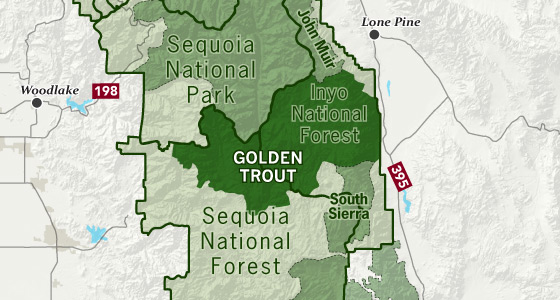
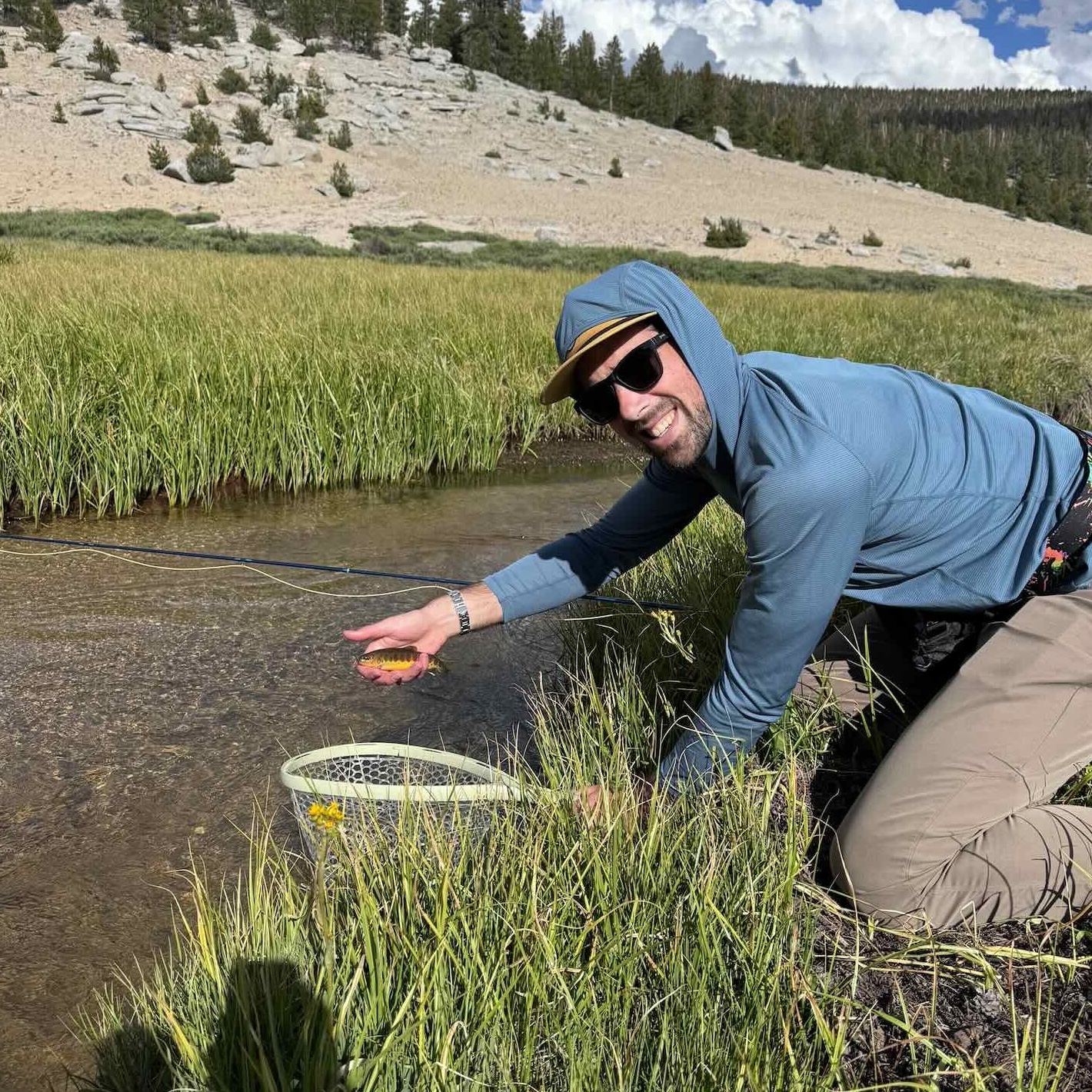
As the name suggests, it is home to the golden trout. There are three species of golden trout: the California golden trout, the Kern River rainbow trout, and the Little Kern golden trout. On this trip, we were only in the region home to the California golden trout. This stunning fish, designated the California state freshwater fish in 1947, is commonly regarded as one of the most beautiful freshwater fish, if not the most beautiful trout. It is endemic to this region, occurring only in a few small rivers on the Kern Plateau, namely the Golden Trout Creek and the South Fork of the Kern; it is separated from the main stem of the Kern by a series of waterfalls. Otherwise, the Kern River rainbow trout is found in the main stem of the Kern River, and the Little Kern golden trout is found in the Little Kern River on the western portion of the GTW.
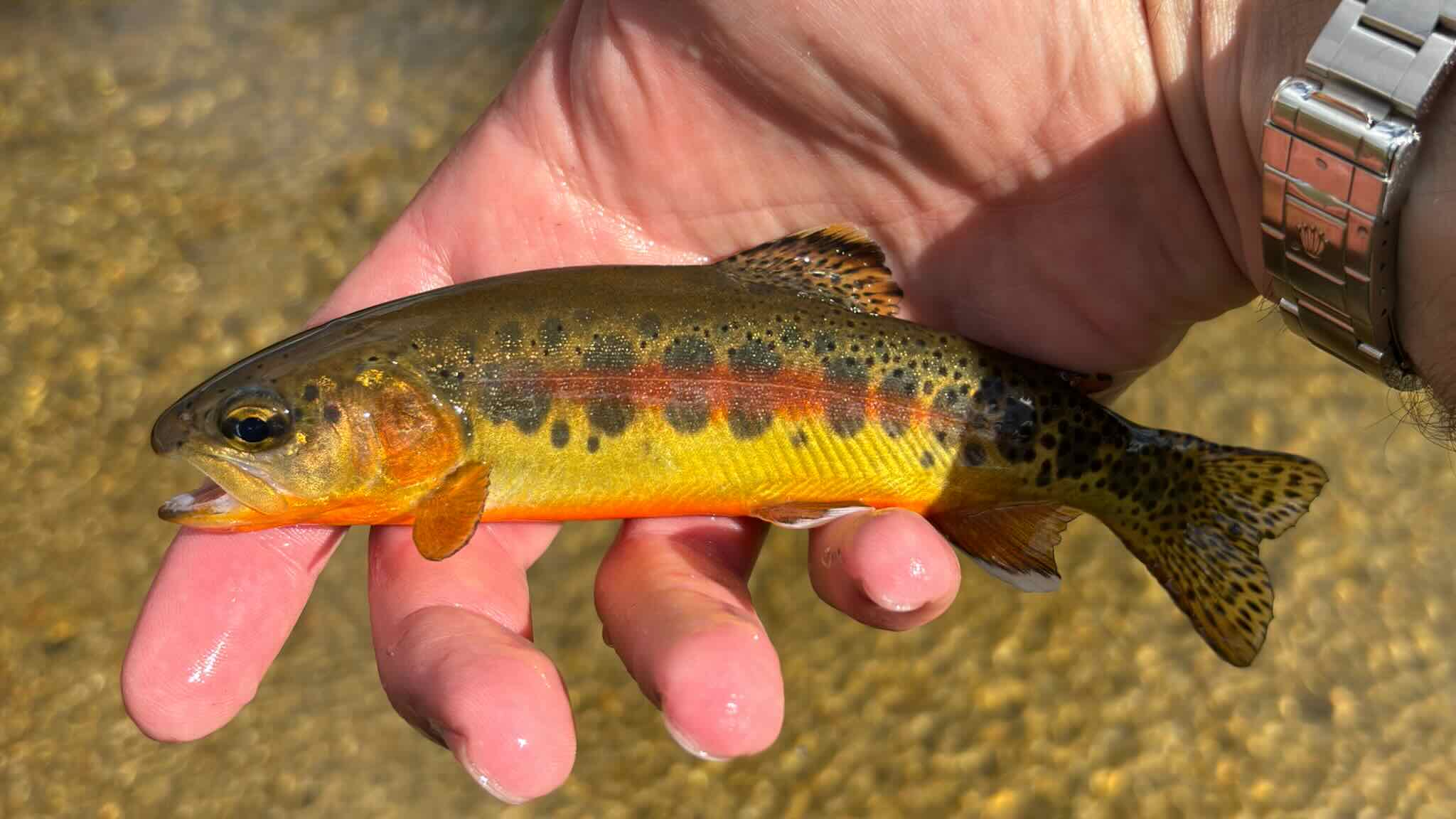
Genetically, the golden trout are highly related to the coastal rainbow trout (or steelhead) found along the Pacific coast. After millions of years of separation by the steep slopes of the Sierra Nevada, these three species have developed their own unique colors and patterns. The bright golds and reds of the California golden trout are stunning and clearly unique. The other two species, while more visually similar to rainbow trout, still have vibrant coloration that distinguishes them from steelhead.
Trip details#
Day One#
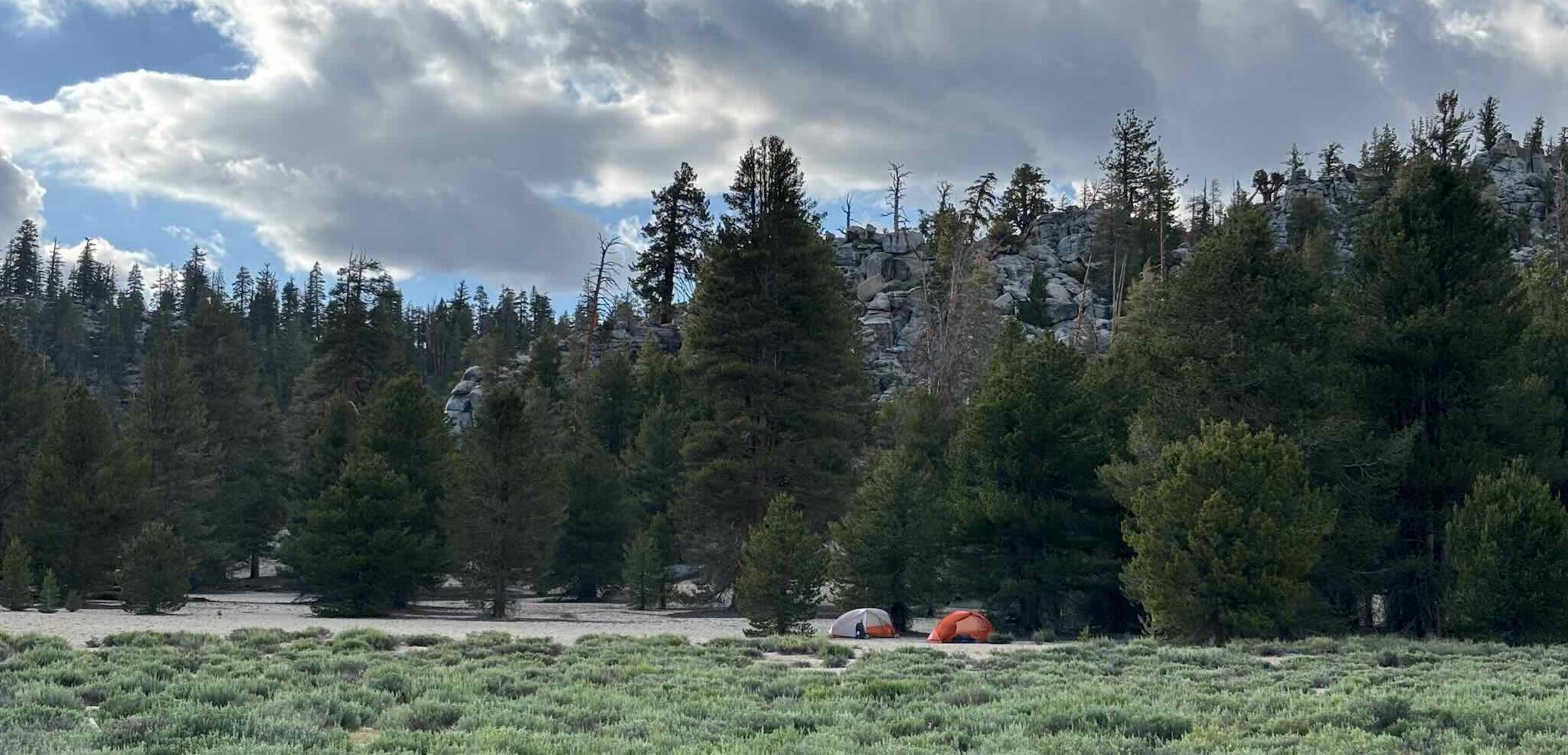
We started from Cottonwood Pass Trailhead, and traveled west over Cottonwood Pass, continuing down along Golden Trout Creek, making camp on a hill of decomposed granite for the first night. We made camp in the middle of the afternoon, which allowed us a few hours of fishing on the Golden Trout Creek.
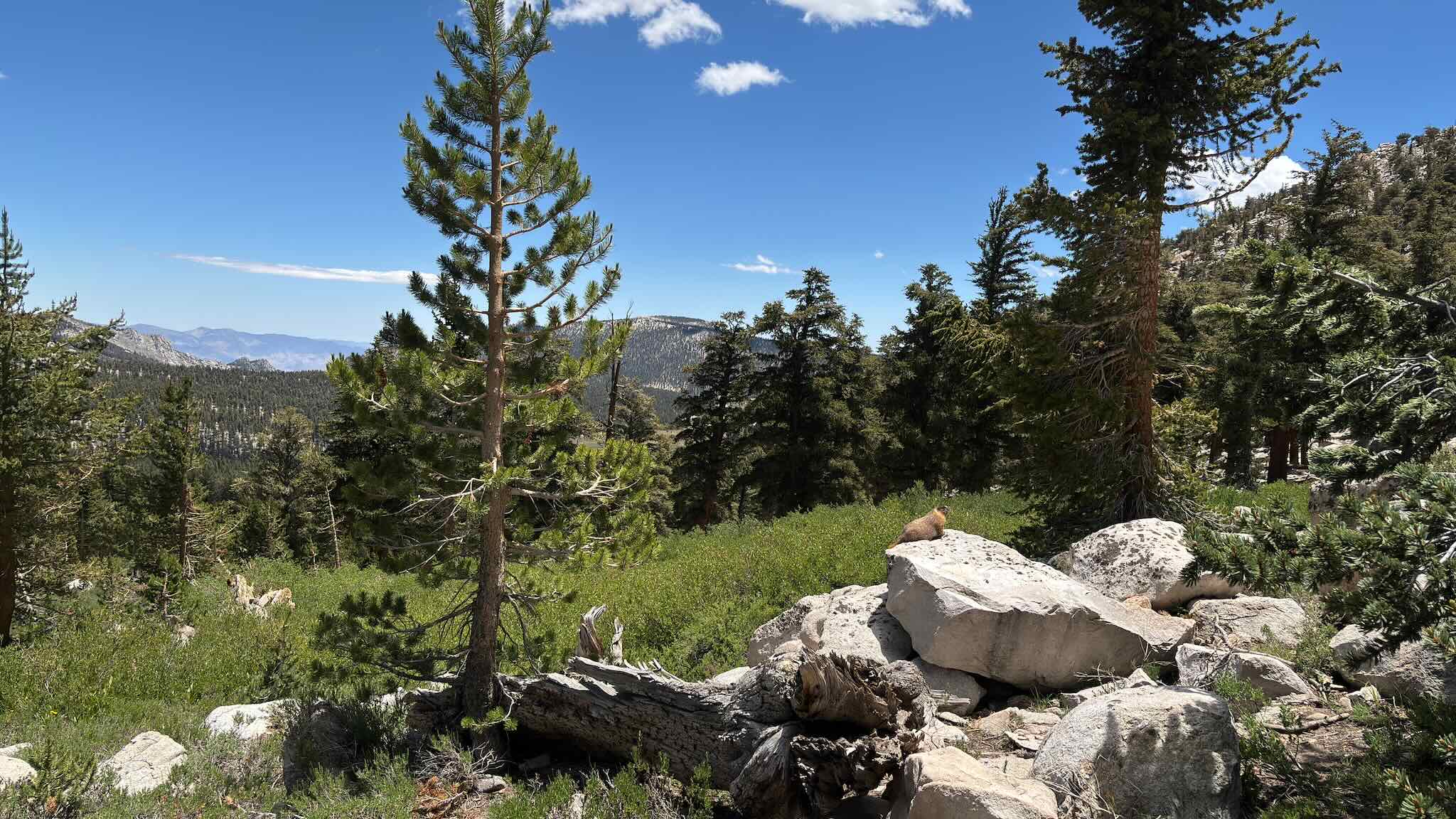
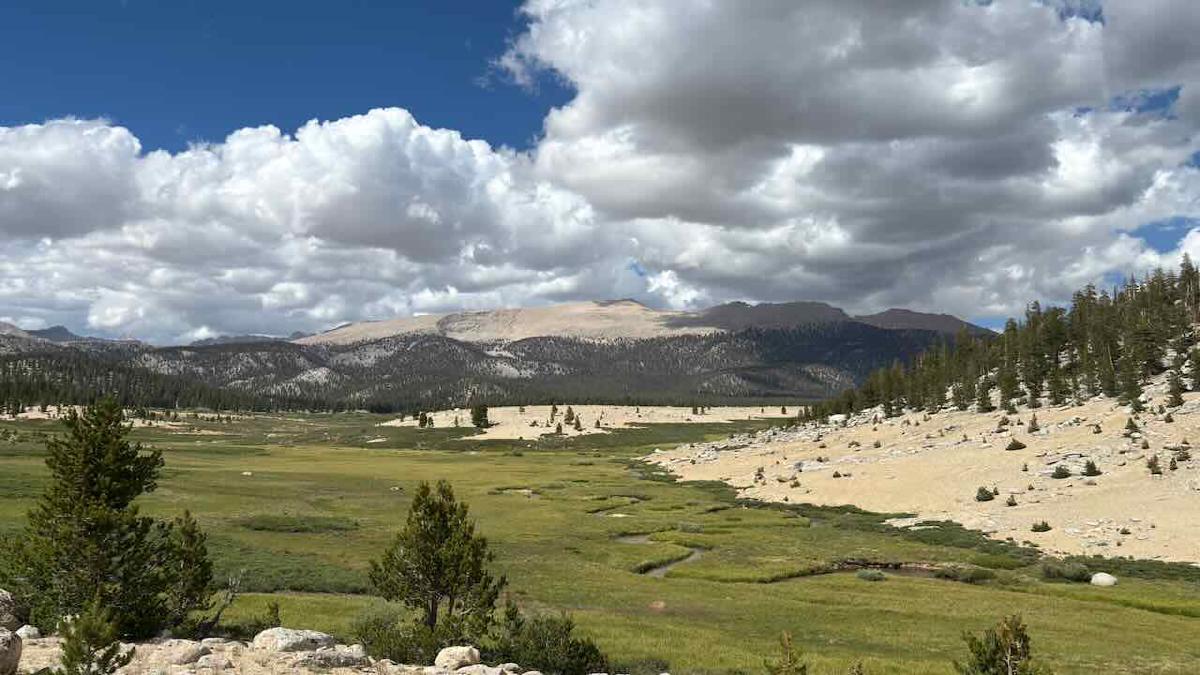
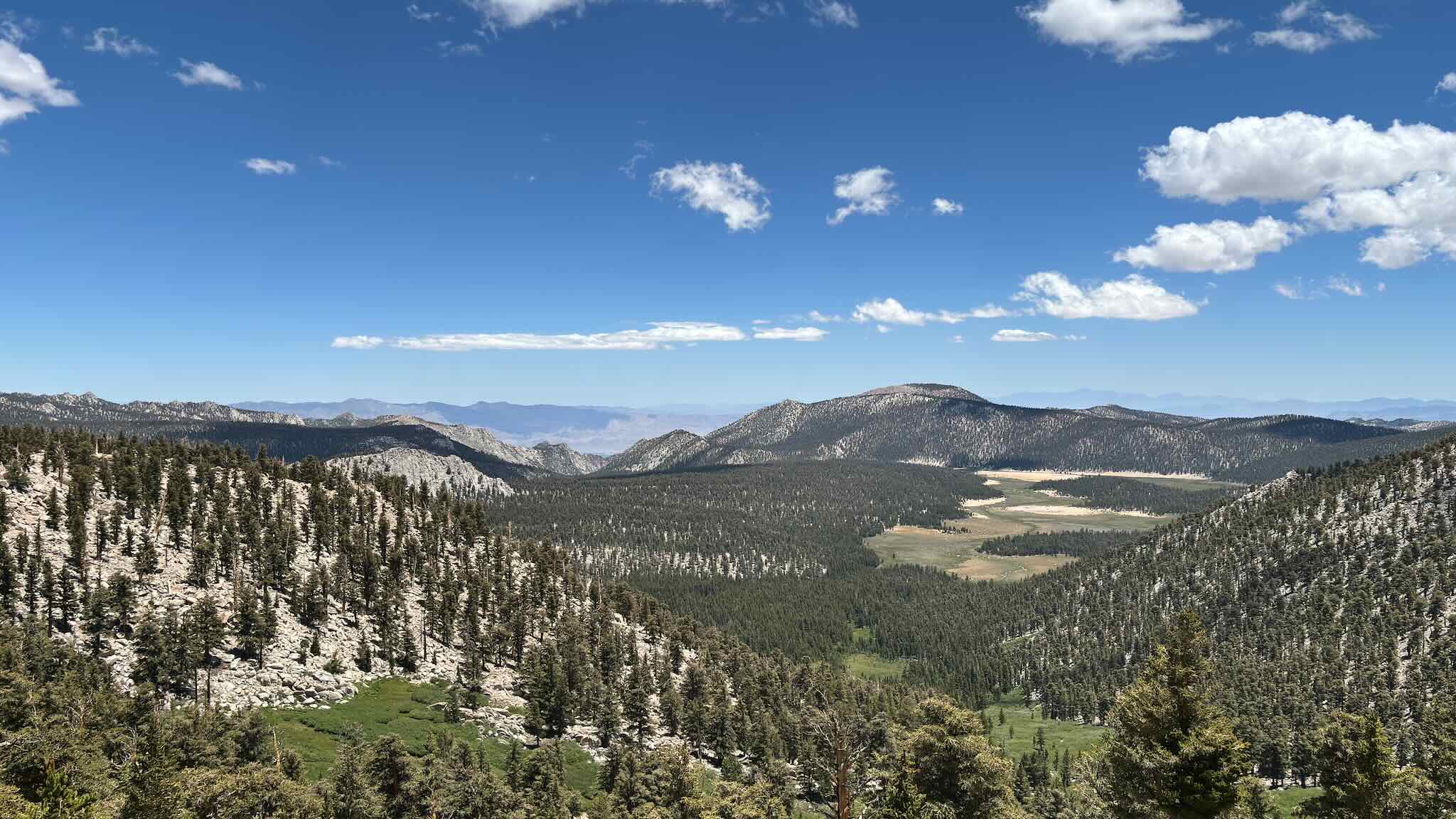
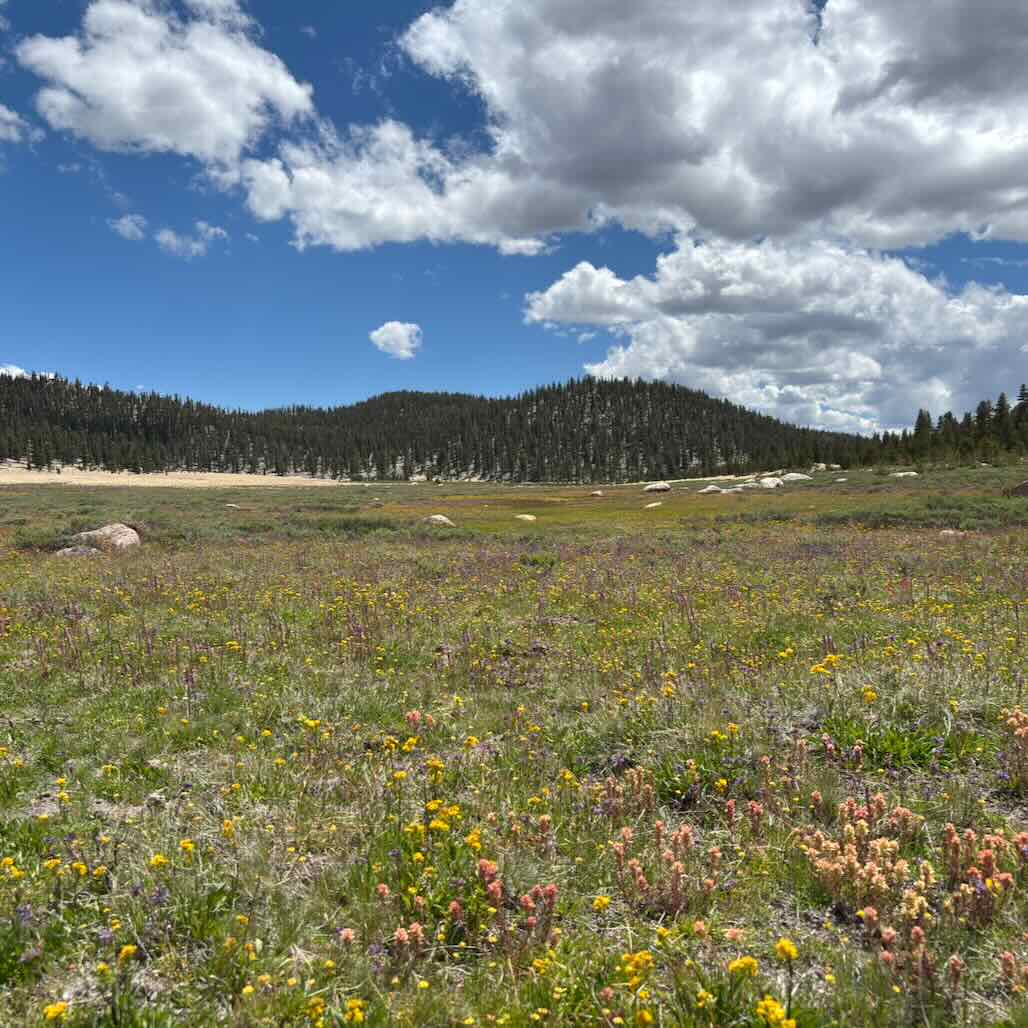
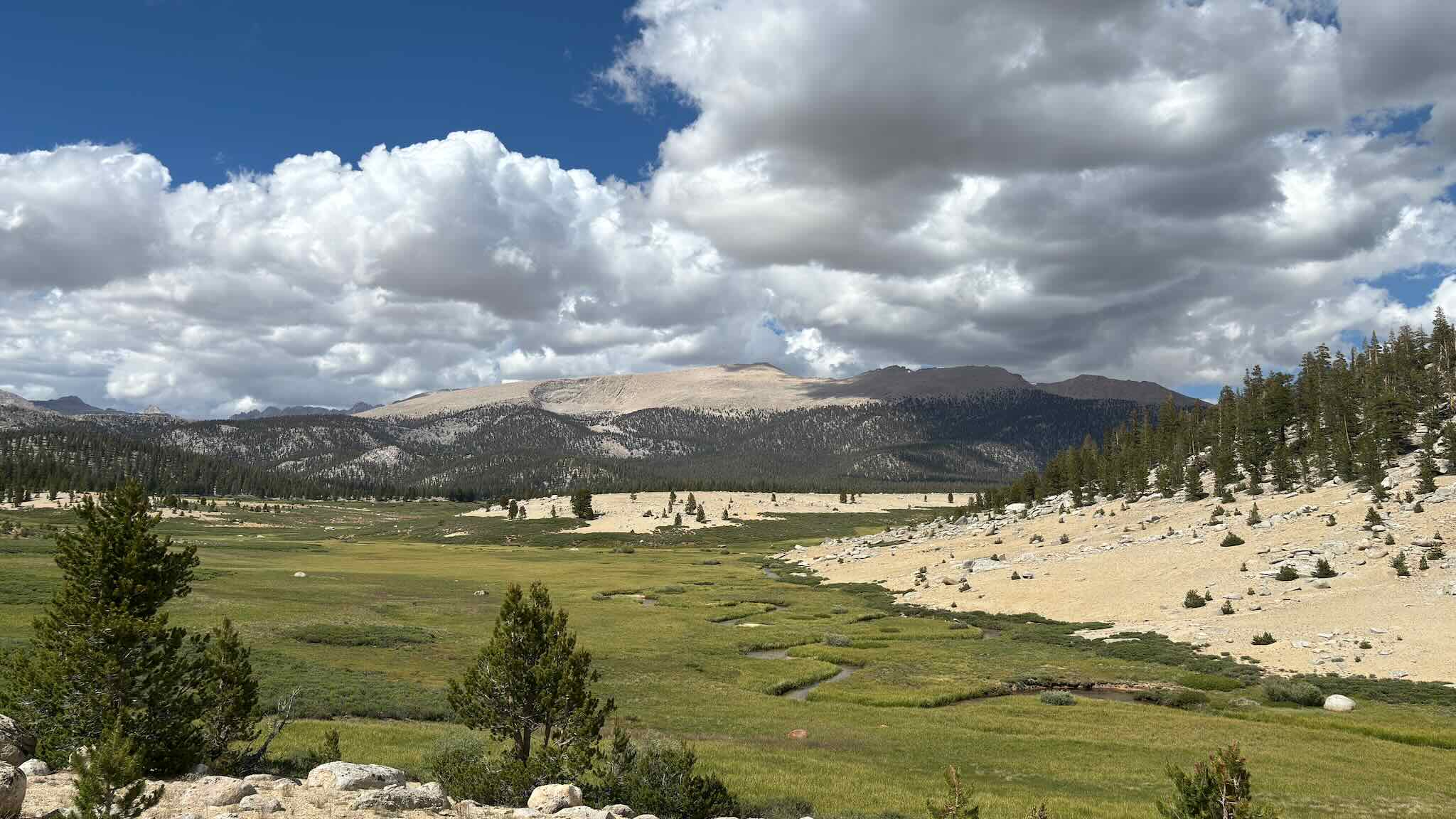
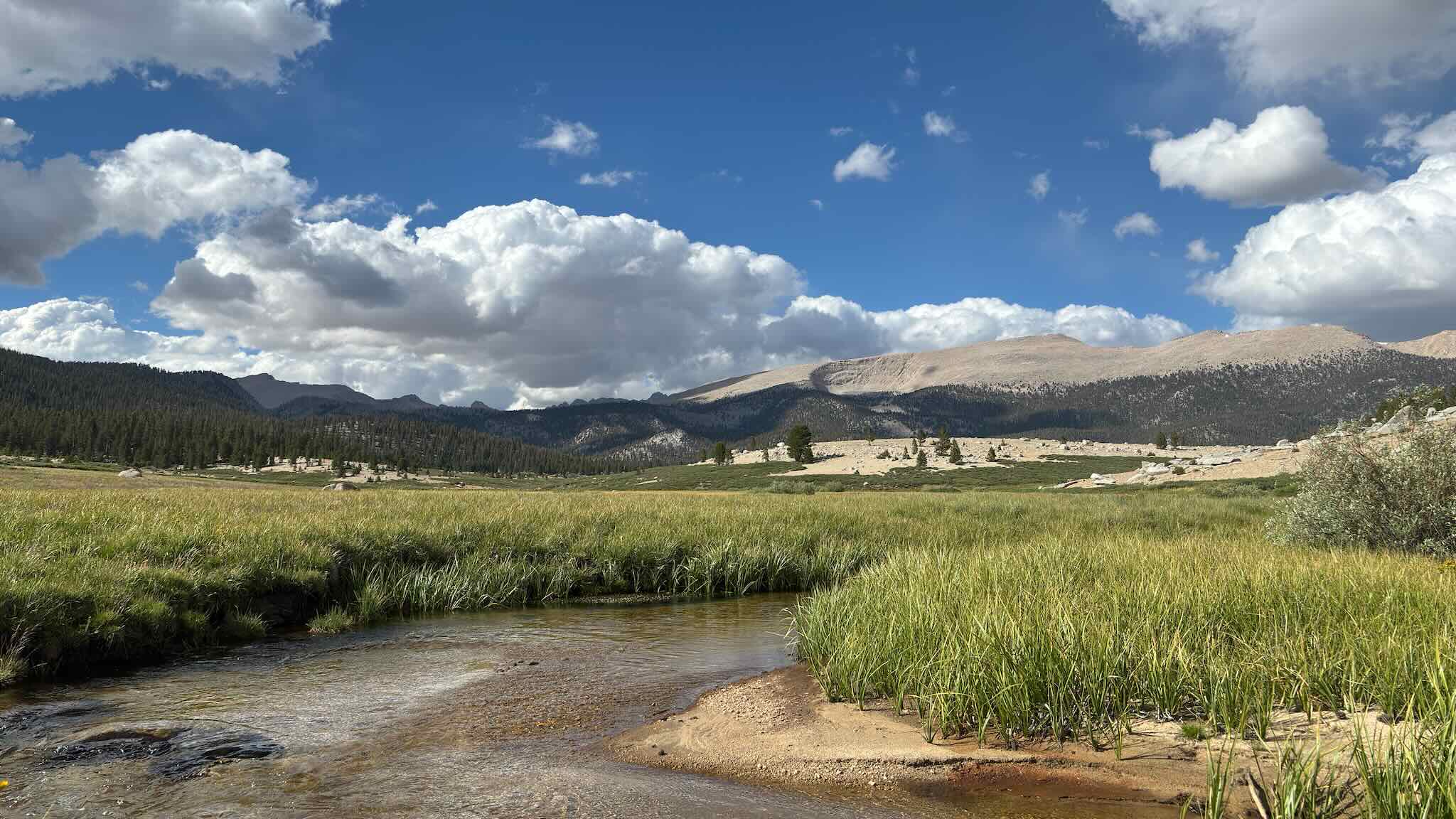
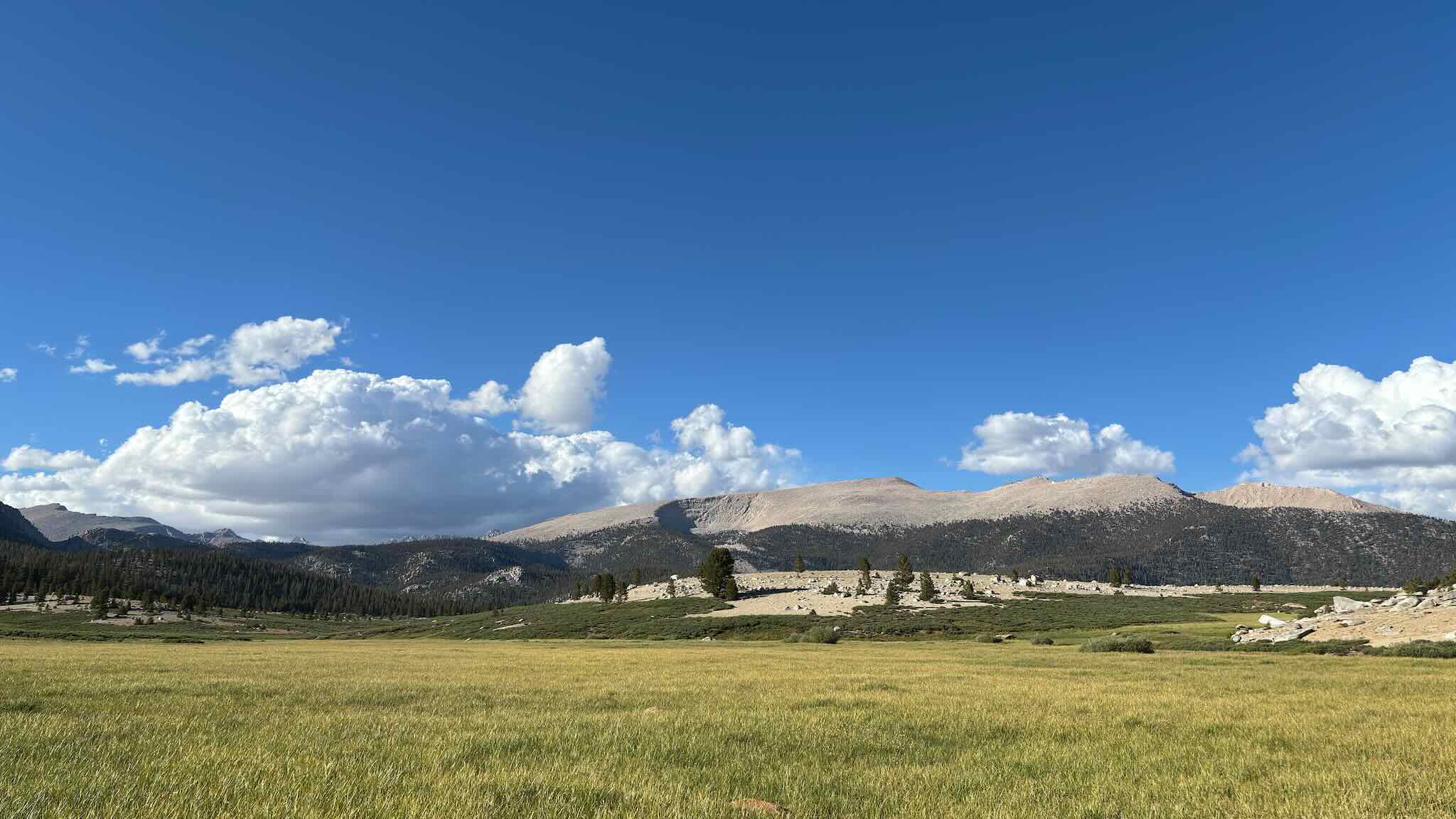
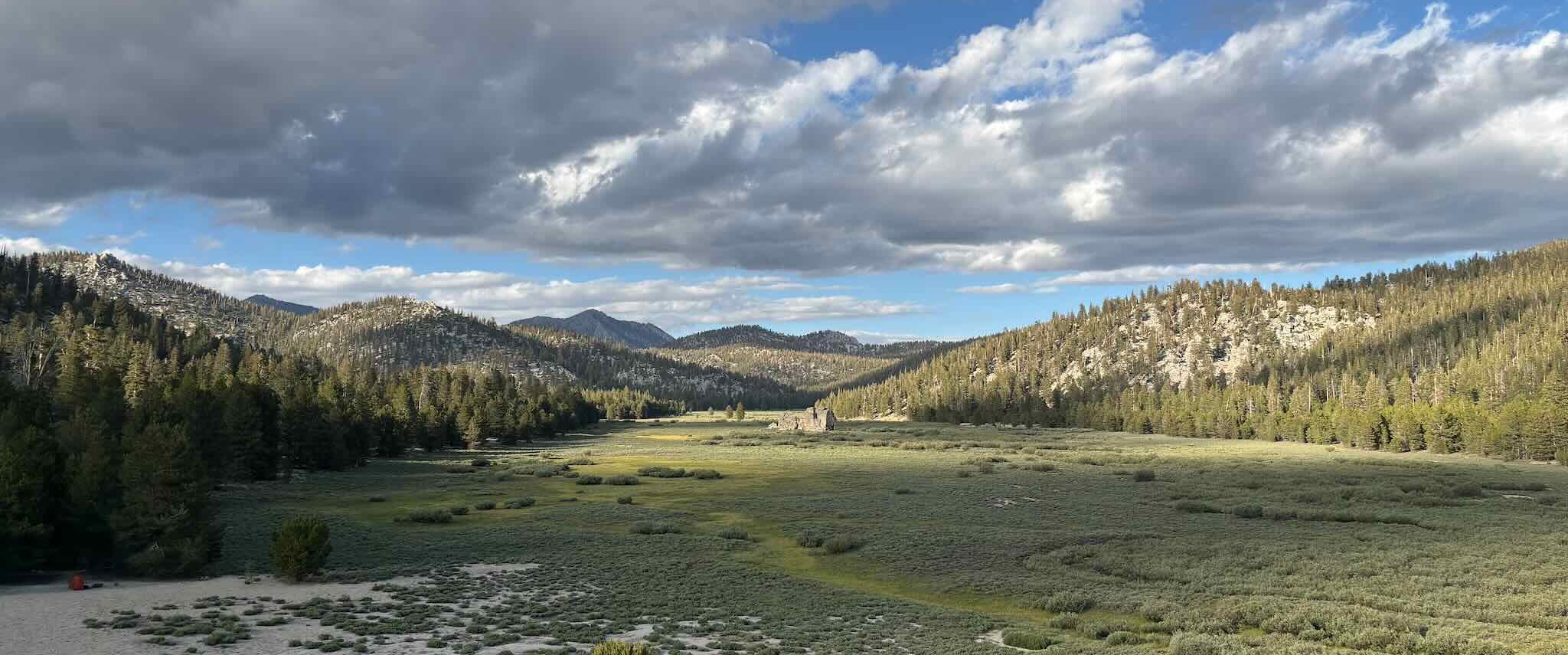
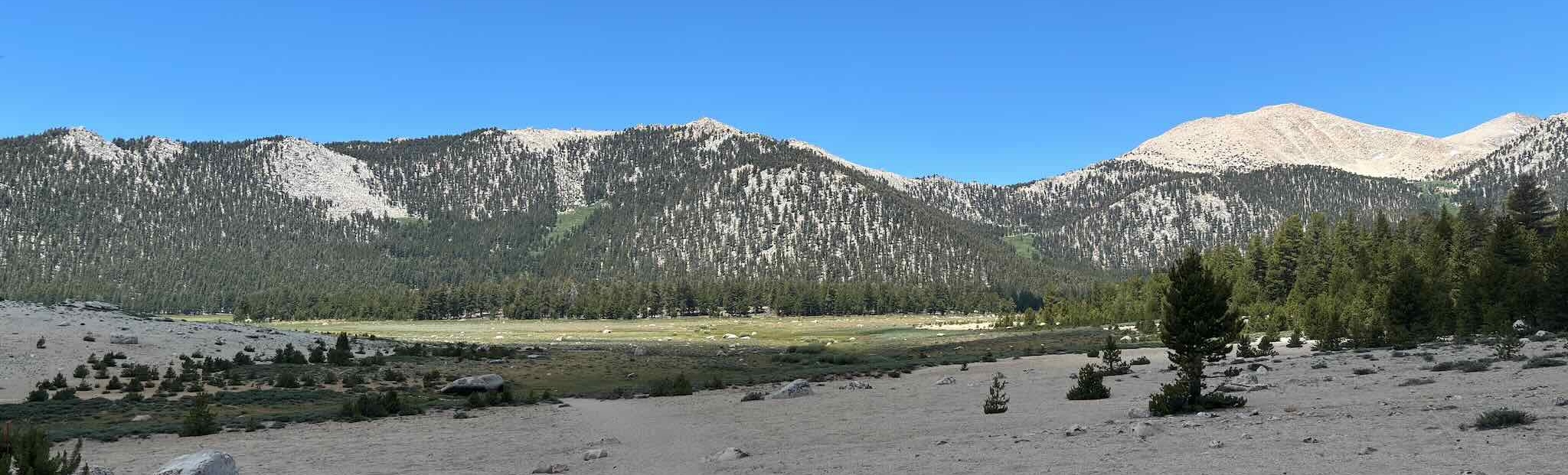
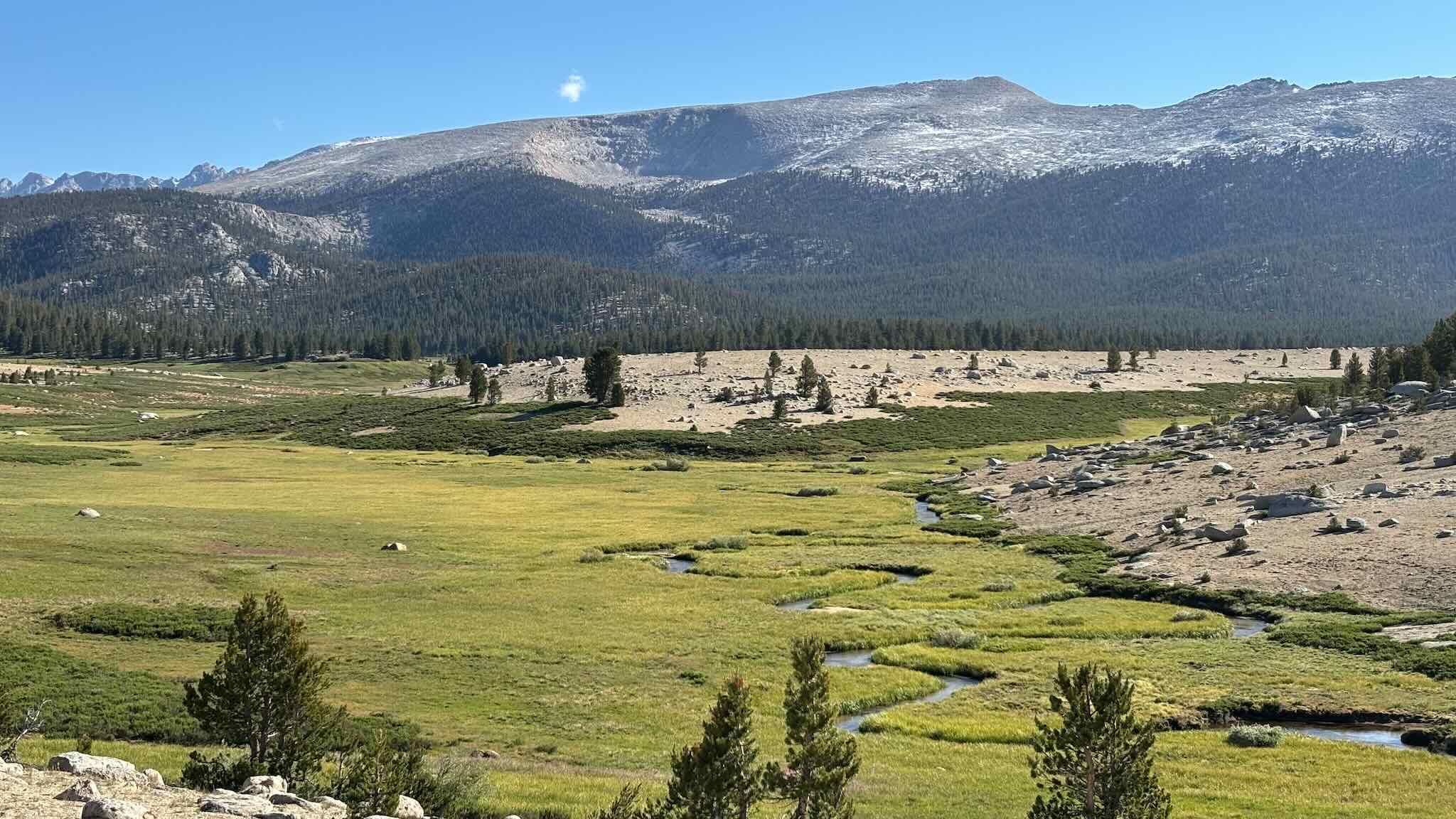
Fishing in Big Whitney Meadow was like something out of a movie. The scenery was stunning in this meadow surrounded by gorgeous mountain peaks. The meadow seemed almost artificial. There was an open expanse of grass and shrubbery with a calm stream meandering through it.
From the start, the golden trout were surprisingly simple to catch1. There were consistent stretches where a trout would strike on every cast. It was common to have multiple trout fight over the same fly. In larger holes, it was easy to pull out a dozen or so fish, with many more striking yet missing the fly. I only stopped at a dozen because I decided to move on, not because the fish had stopped biting. After one of the most incredible afternoons of fishing in my life, both due to the scenery and the fish themselves, we had a nice dinner and were treated to a small thunderstorm in the evening, waking up to ice-covered tents.
Day Two#
The second day we were hoping to get down to the main stem of the Kern, but realized it would be too large an effort to go down and then back up the next day. So we decided to head down to the confluence of the Golden Trout Creek with Volcanic Creek before returning up-stream to make camp part way up the South Fork of the Kern.
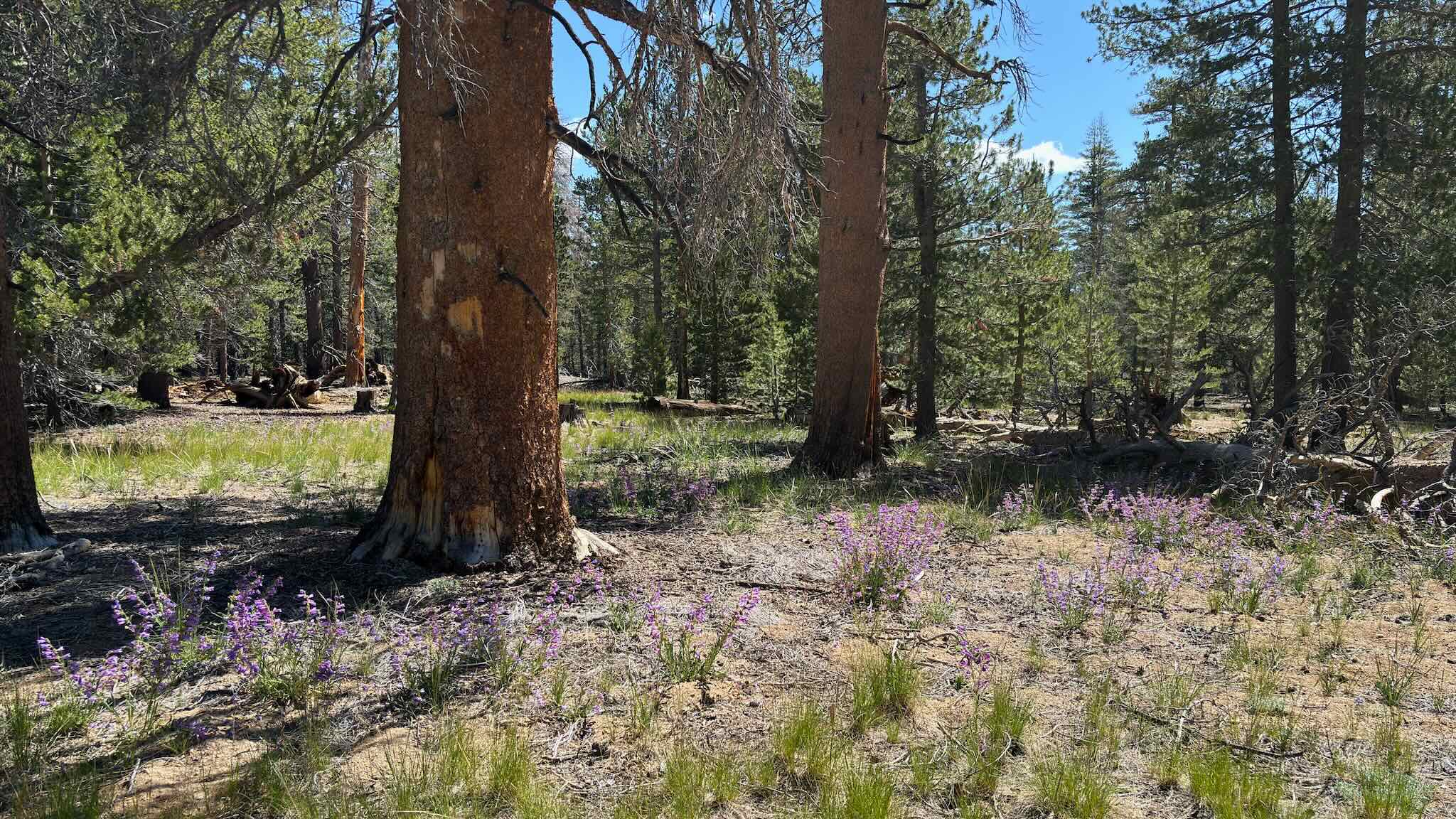
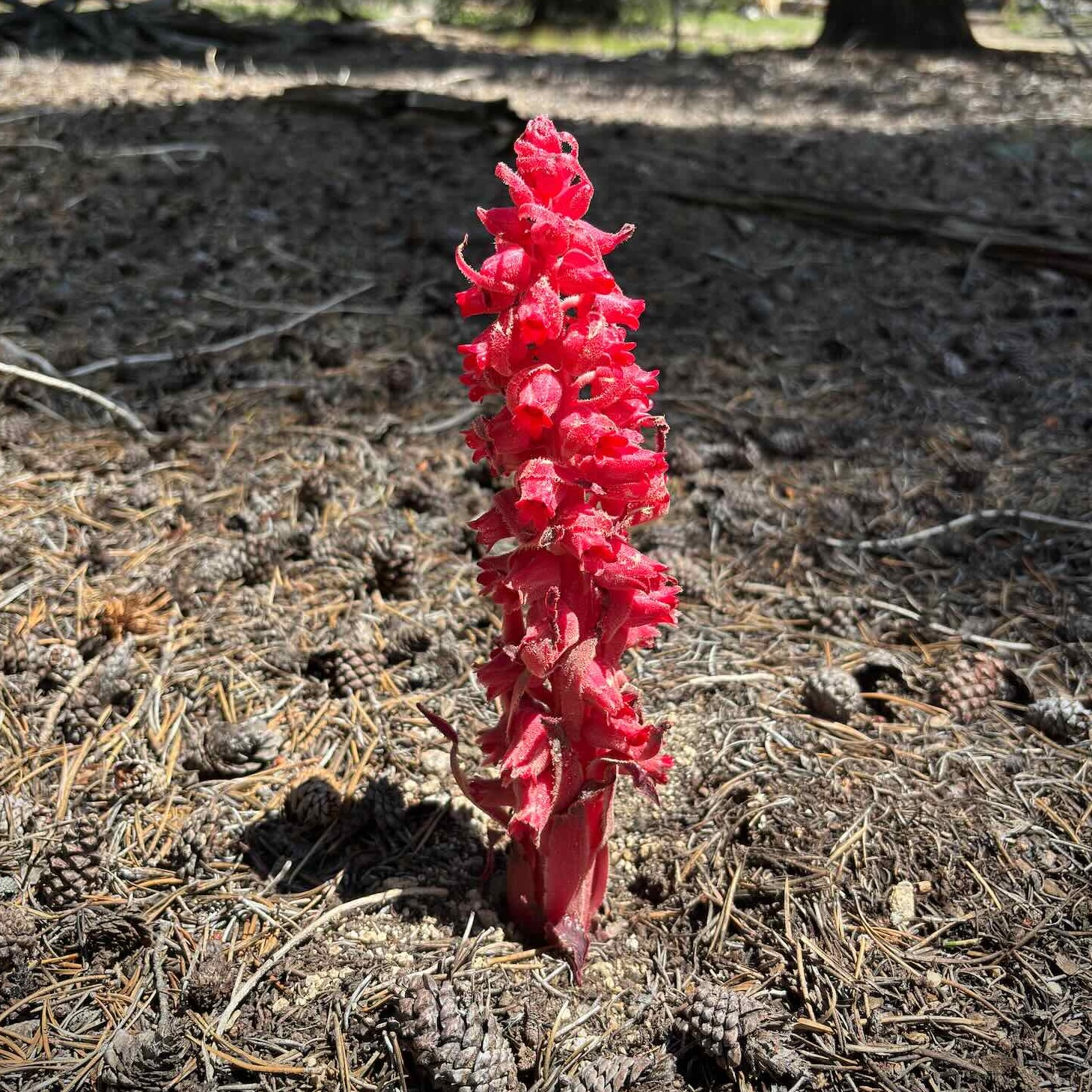
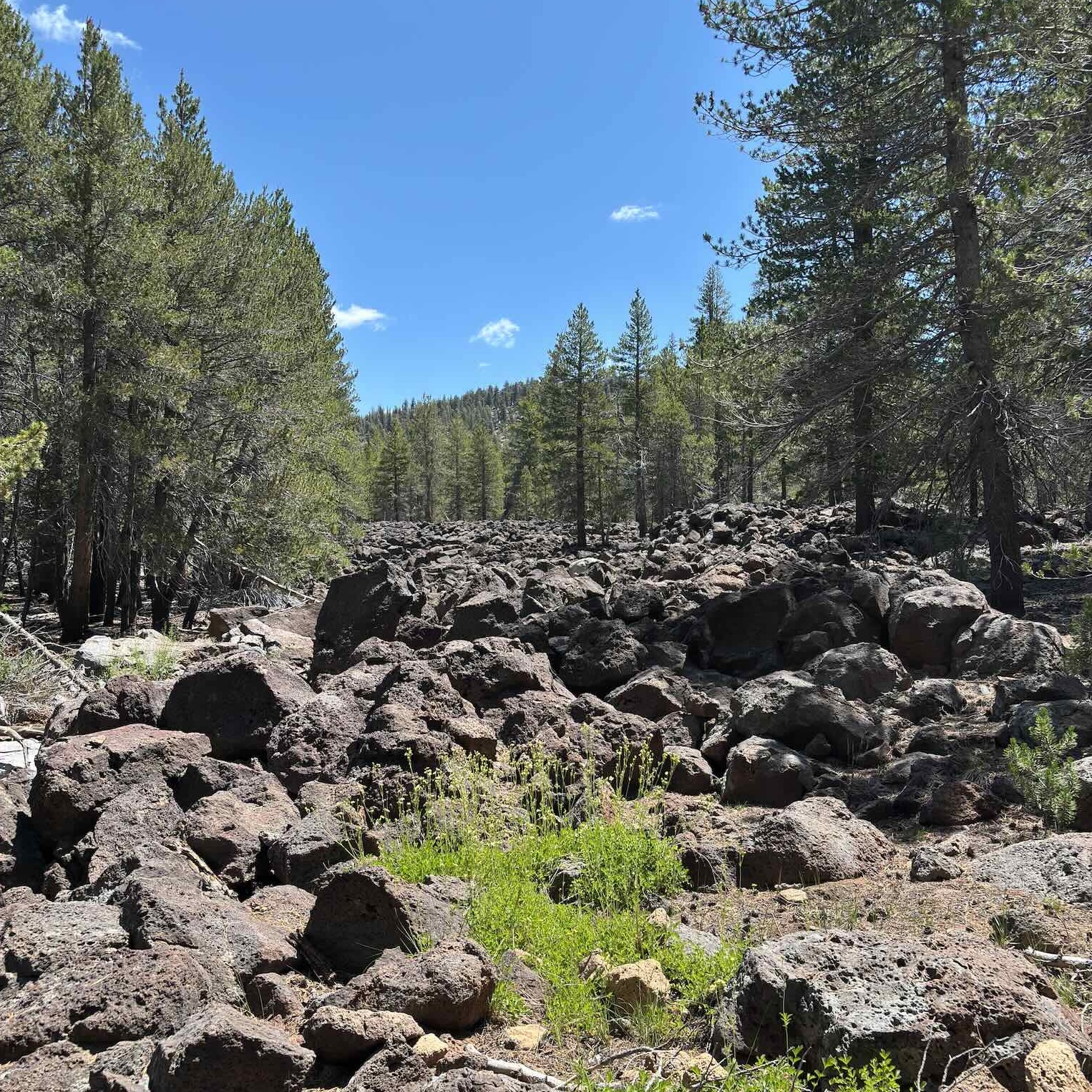
Along this hike of 17 miles in total, we saw enchanting wildflowers, unique geography, including beach-like sand of decomposed granite, boulders, and lava rock formations.
Though we were exhausted when we finally made camp, we still went out and did a bit of fishing, catching a handful more trout along the South Fork of the Kern. Interestingly, the Golden Trout Creek and South Fork of the Kern come within a few hundred feet of each other, but do not touch, and instead are separated by a very small sliver of land, creating some genetic isolation between these two strains of California golden trout.
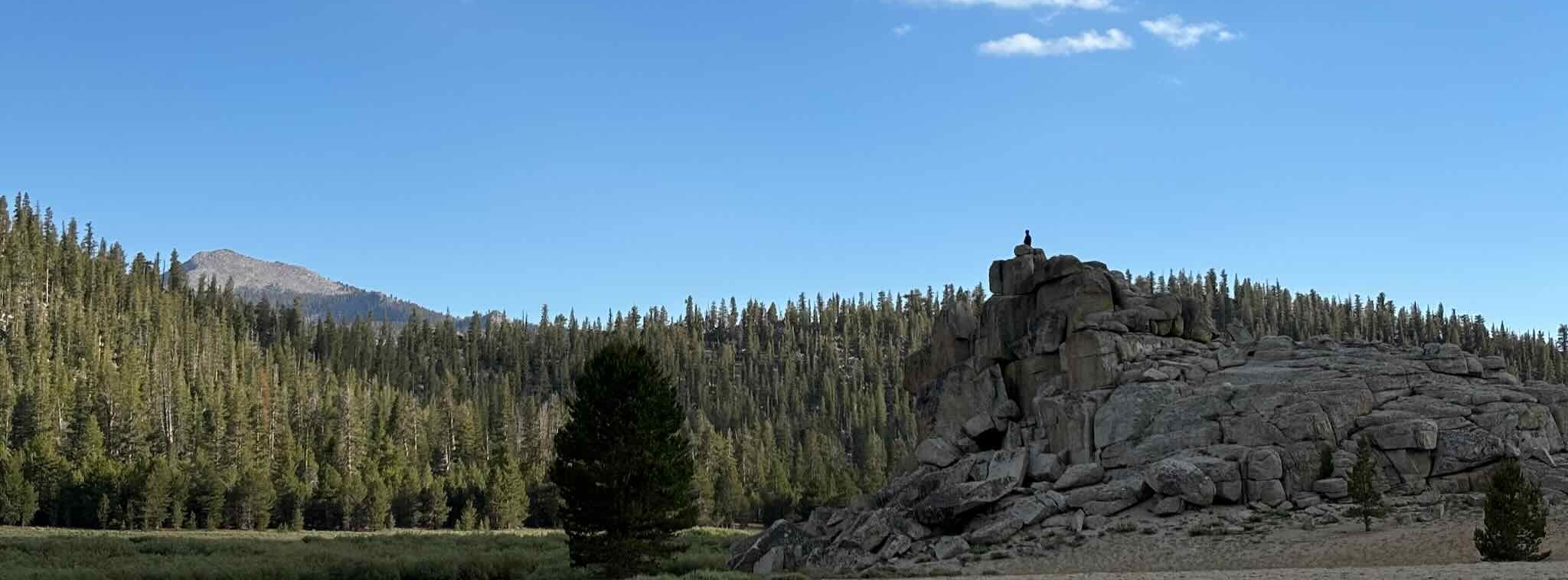
Adjacent to our campsite was a large pile of boulders that had been left behind as glaciers had receded through the valley. While I was fishing for the afternoon, Jacob went and climbed up to get a nice view, and I joined him afterward.
I was surprised by the amount of feces at the top, presumably from a medium-sized rodent. In the morning that was confirmed as we saw two marmots looking out over their domain.
Day Three#
On the third day, we had a 10-mile hike up along the South Fork of the Kern and over Trail Pass before returning to the trailhead from where we started. It was a nice hike that took a couple of hours and brought us through some more of the stunning landscapes.
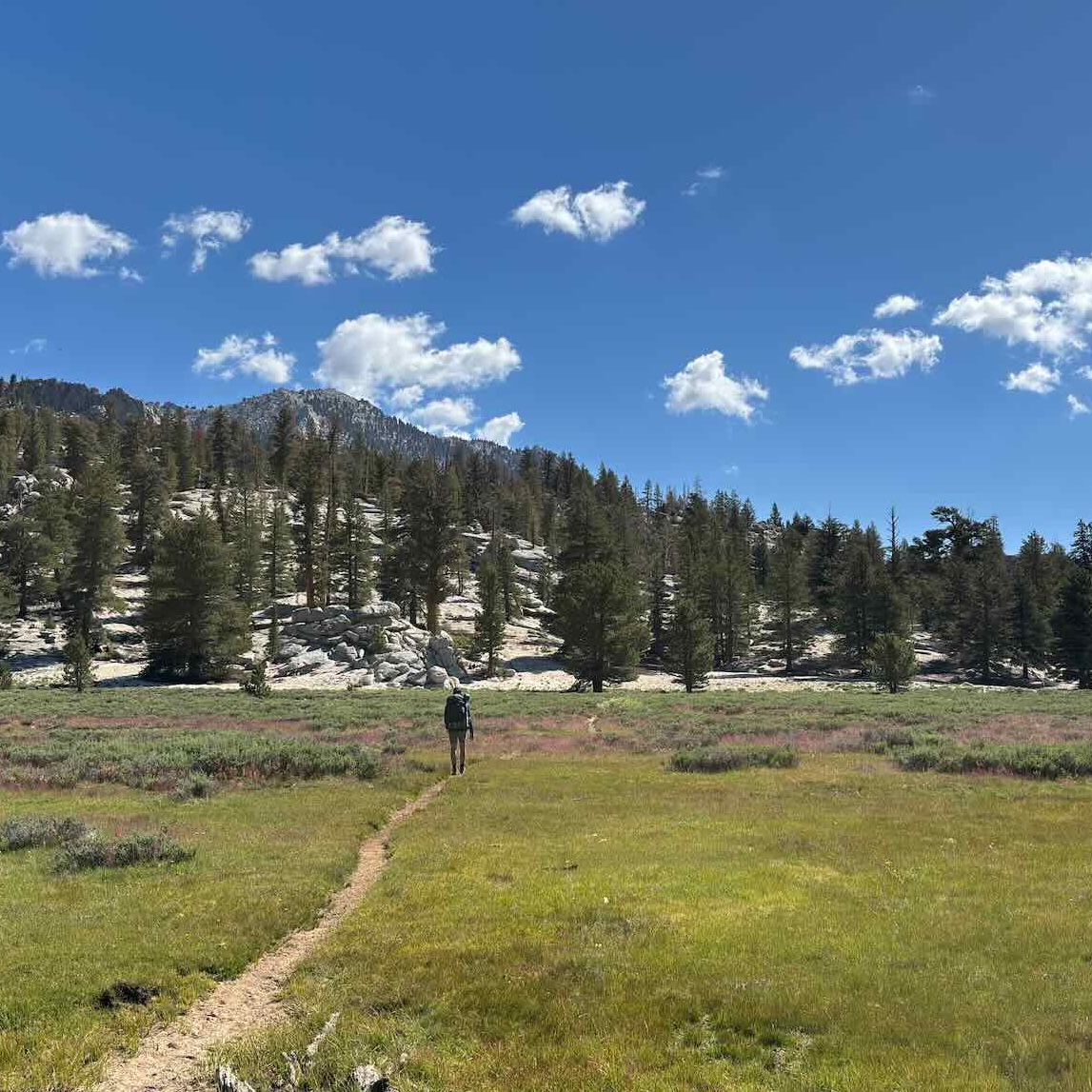
Overall, I was amazed by the grandeur of the Sierra Nevada. The landscape was incredibly unique: shifting abruptly from alpine zones to wooded forests, barren beaches of decomposed granite butting up against lush meadows with peaceful meandering streams. At every moment there was something beautiful to look at.
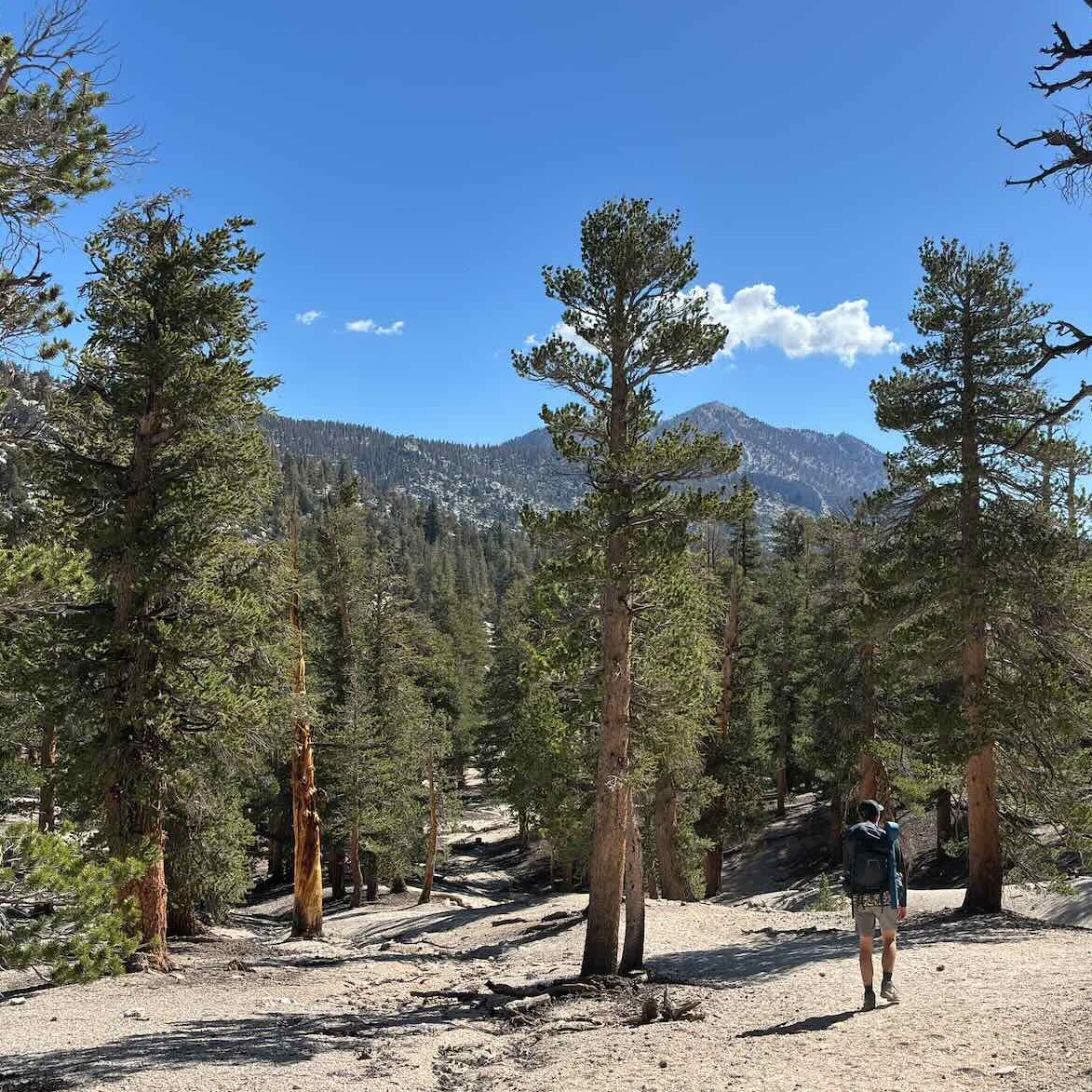
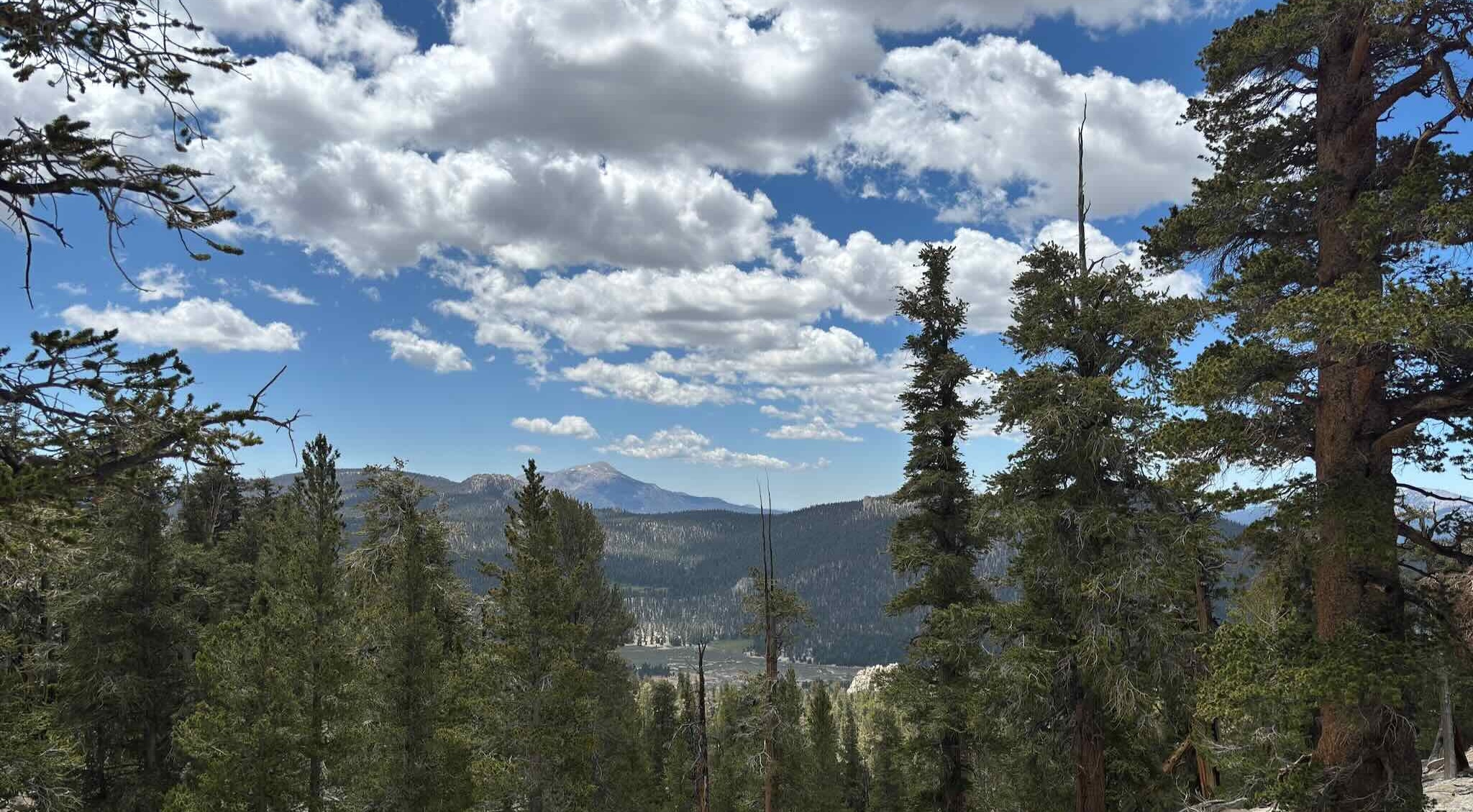
As a final note, I want to comment on the surprisingly few mosquitoes we encountered. Before the trip, I was a bit concerned that we would constantly be surrounded by mosquitoes. I didn’t expect they would ruin our trip, but assumed we would be relatively uncomfortable. Instead, we saw almost none. The worst we had was about 30 minutes after dinner on the second night, but even that was moderate, and we were able to still stay out and just shoo them away every now and then. Had we camped a little further up the slope, I doubt we would have seen any. In the end, we were both pleasantly surprised with how lucky we got on the mosquitoes.
What I would do differently#
One of my favorite aspects of backpacking and fishing is learning along the way so we can optimize and improve future trips. Below are some notes on things I would change for similar backpacking trips.
Route#
In general, our route was great, but after seeing how much ground we could comfortably cover and still do some fishing, I think I would aim to follow down Golden Trout Creek and then up the South Fork of the Kern. One slight detour would maybe be down to a meadow where Johnson Creek joins the Golden Trout Creek.
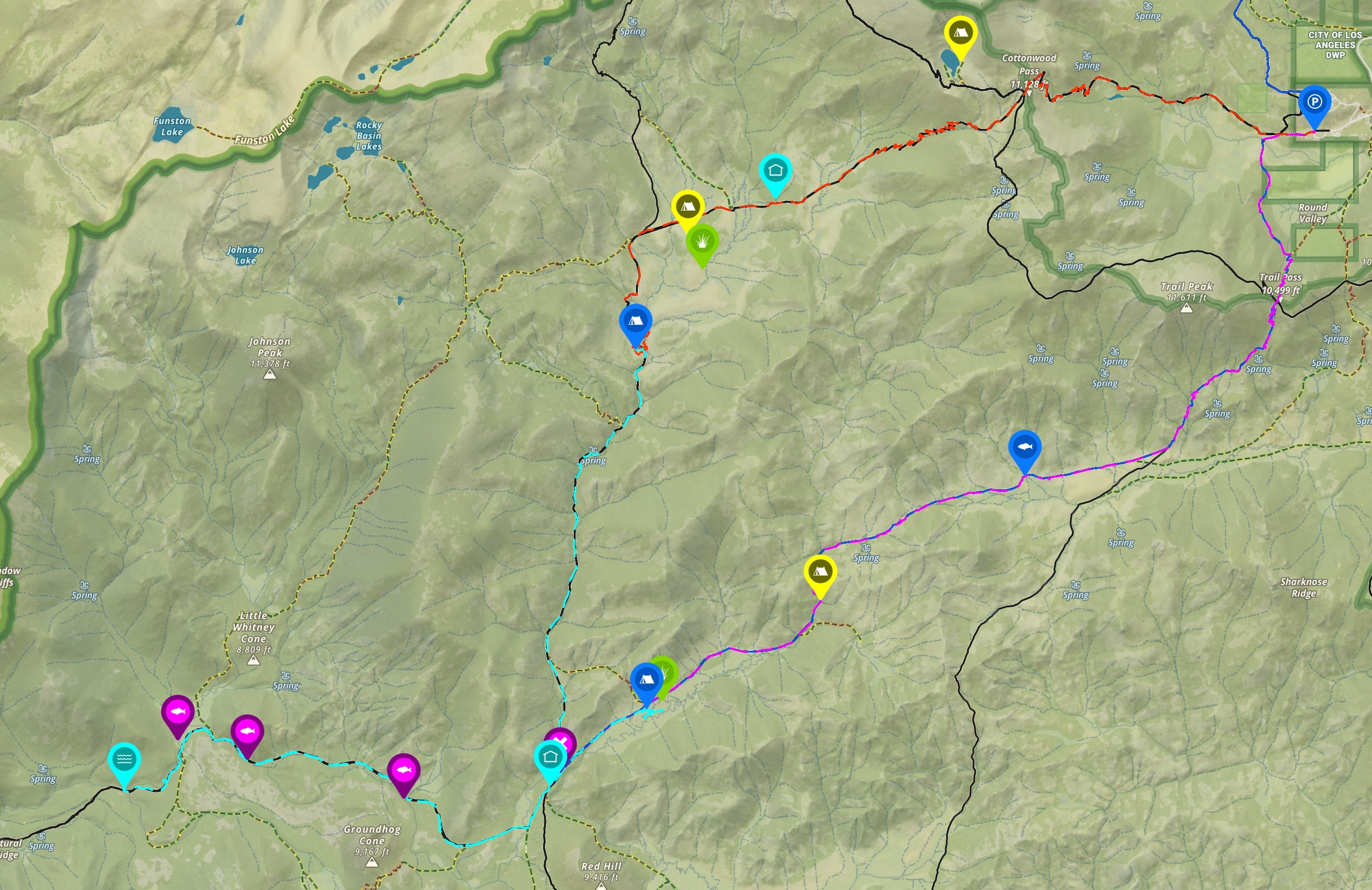
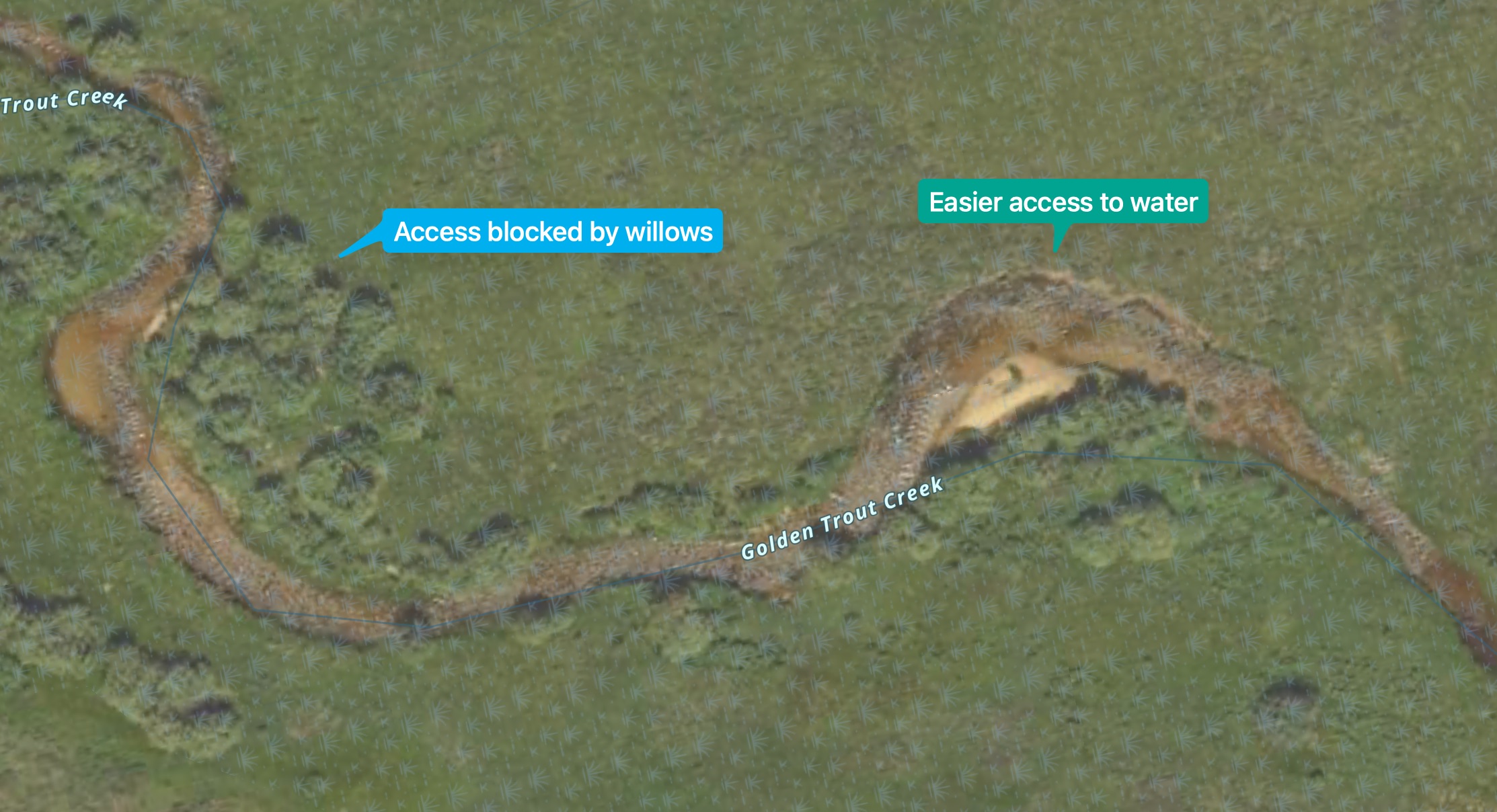
I had seen some photos and watched videos but didn’t really understand what the meadows would be like. In places such as Big Whitney Meadow the creek was surprisingly accessible. But the stretch of the South Fork of the Kern that we were on was surrounded by willows and difficult to access. What I found after doing ad hoc inspections of the satellite images is that you can actually see where these trees are and aren’t along the rivers in the meadows. Were I to do this again, I would spend more time before the trip locating meadows and specific stretches of each river that have good stream access.
Gear#
To start, here were some things that with hindsight I could change, but I don’t regret doing. For instance I was hoping to use my tarp, but because of the bug pressure, I figured I’d bring my full tent. In the end, I probably would have been fine with the tarp, but I think brining the fully enclosed tent was the prudent choice.
The following are some gear changes and tweaks that I would make for the next trip:
- Two-sock model: On this trip, I brought one pair of socks for hiking and one pair for sleeping. In the end, I didn’t need the sleeping pair because I was plenty warm just with my quilt. So I had just one hiking pair of socks. If I were to do this again, and I think for backpacking trips going forward, I’ll do a two-sock model where I rotate one pair of socks for each day. Thus, I could wash the previous day’s pair in the morning and dry it on my pack as we hike. Especially with fishing, it’s easy to get my feet and socks wet, which led to greater discomfort in general, but also some unnecessary blisters.
- Toe socks: As noted above, hiking in general, but also with fishing, it’s not uncommon to get wet feet. I think if I had worn toe socks, I could have saved myself from two minor blisters between my toes.
- More midday snacks: Neither of us packed specific meals for lunch, but instead opted to have smaller snack foods throughout the day. Next time I would need to bring more food with the knowledge that I would like to have in the late morning, midday, and afternoon.
- Wood stove: Inyo National Forest regulations prohibited us from having campfires in the evening2. I brought my alcohol stove, but was getting light on alcohol on day two. This trip would have been perfect for a small wood-burning stove, as there’s plenty of fuel around. This way I could have used the alcohol for a mid-morning coffee or a morning coffee when we wanted to pack up camp real quick, and then use the wood-burning stove in the evenings to heat up my meals, some hot chocolate, and even just for some additional warmth. I don’t currently own one of these little stoves, so that will be something I should look into before the next trip.
Jacob doesn’t fish and hardly tried to learn to fly cast. Even still, he was able to catch a handful of California golden trout by just high-sticking through the water. ↩︎
From my reading of the campfire prohibition at the time of our trip, I think technically a small wood-stove would have been illegal. While I think it was still permissible in the intent of the law if not the letter, I would have to weigh the risk of bringing it on this trip were it an option. ↩︎